



The key question when choosing a property is how well that income is protected against falling demand and the arrival of new competitors. In the south of Bali, both factors currently work in favour of property owners.
Yields here run at 13–16% a year — noticeably higher than most overseas markets:
| Market | Yield | Entry point |
|---|---|---|
| Bali (HABBI) | 13–16% a year | from $131,000 |
| Dubai | 6–8% a year | from $250,000 |
| Europe | 3–5% a year | — |
The reason is simple: demand is growing faster than supply.
Content:
- Why Melasti
- How the yield is built
- What HABBI Bali Melasti is
- Who is building and managing it
- An investment, using a studio as an example
- Which risks the project covers
Why Melasti
In 2025 Bali welcomed around 16 million visitors. One of the most sought-after spots remains Melasti beach on the Bukit Peninsula, which draws about 7.5 million guests a year. Tourist numbers here are growing steadily, at roughly 7% a year.
International tourism is further evidence of steady demand. While 6.3 million foreign tourists visited Bali in 2024, that figure rose to 6.9 million in 2025.
At the same time, supply is limited. A moratorium on new construction is in force on the Bukit — the authorities no longer issue permits for new projects. Visitor numbers climb year on year while supply stays frozen. For an investor, that means a higher likelihood of sustained occupancy and rising rental rates over the long term.
A further advantage is diversified demand. Around two-thirds of guests are Indonesian residents, the rest foreign tourists. This reduces the market’s dependence on any single country or currency.
How the yield is built
Property markets often quote gross yield — before management, maintenance and commission costs are deducted.
In HABBI’s case, the figures refer to the yield after operating costs and the management company’s fee.
The scenarios look as follows:
| Occupancy | Rate per night | Yield |
|---|---|---|
| 65% | $95 | ~13% a year |
| 70% | $120 | ~14% a year |
| 75% | $160 | up to 16% a year |
Even the conservative scenario delivers a yield of around 13% a year.
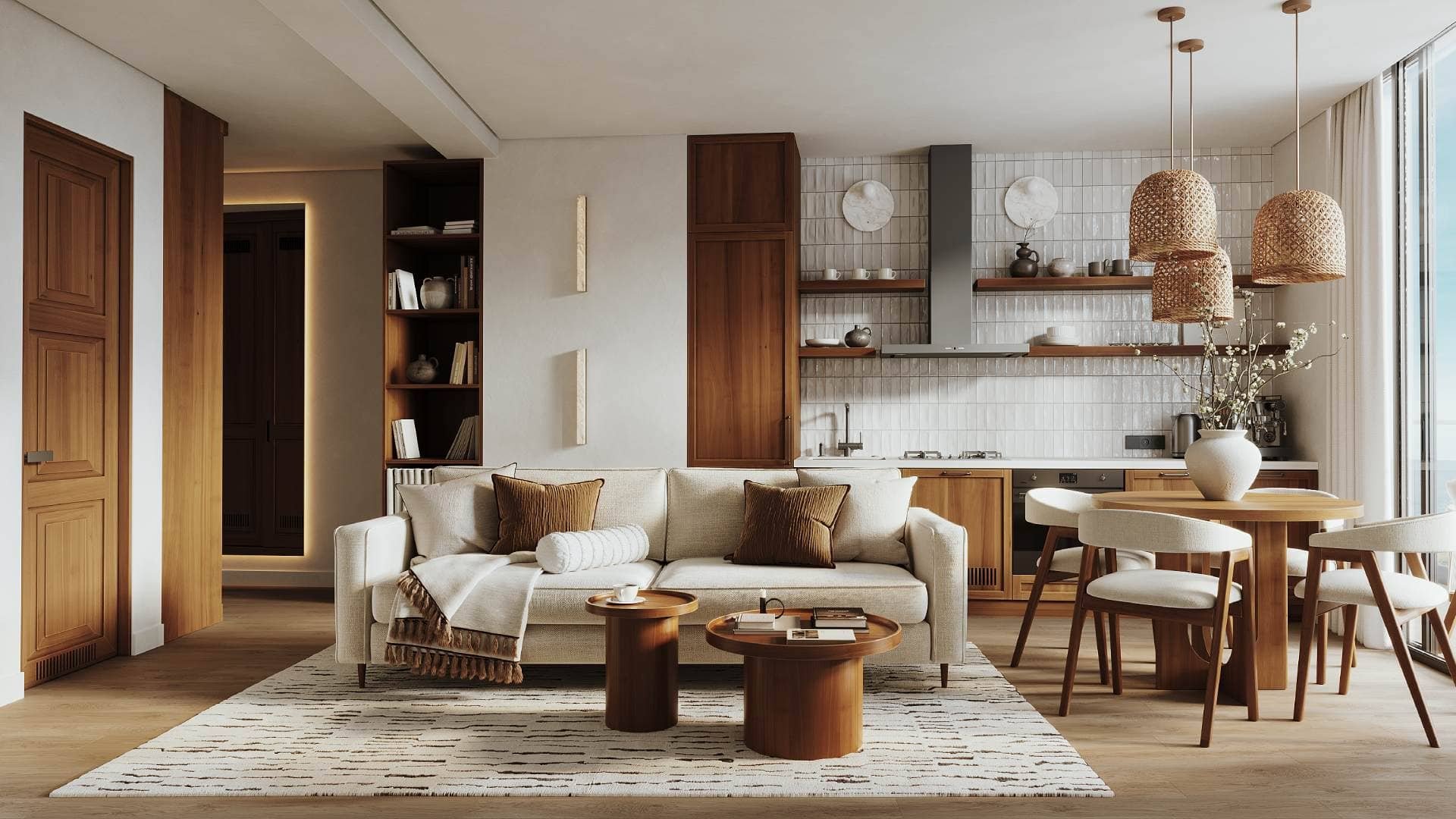
Another advantage relates to the format of the apartments. The average studio on Bali measures about 25 m² and sleeps two. At HABBI, a studio occupies 37 m², includes a zoned bedroom and a living area, and can sleep up to four — which supports a higher average rental rate.
What HABBI Bali Melasti is
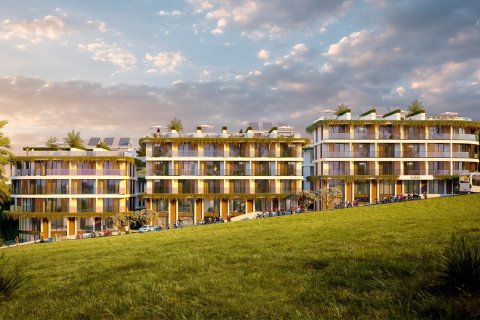
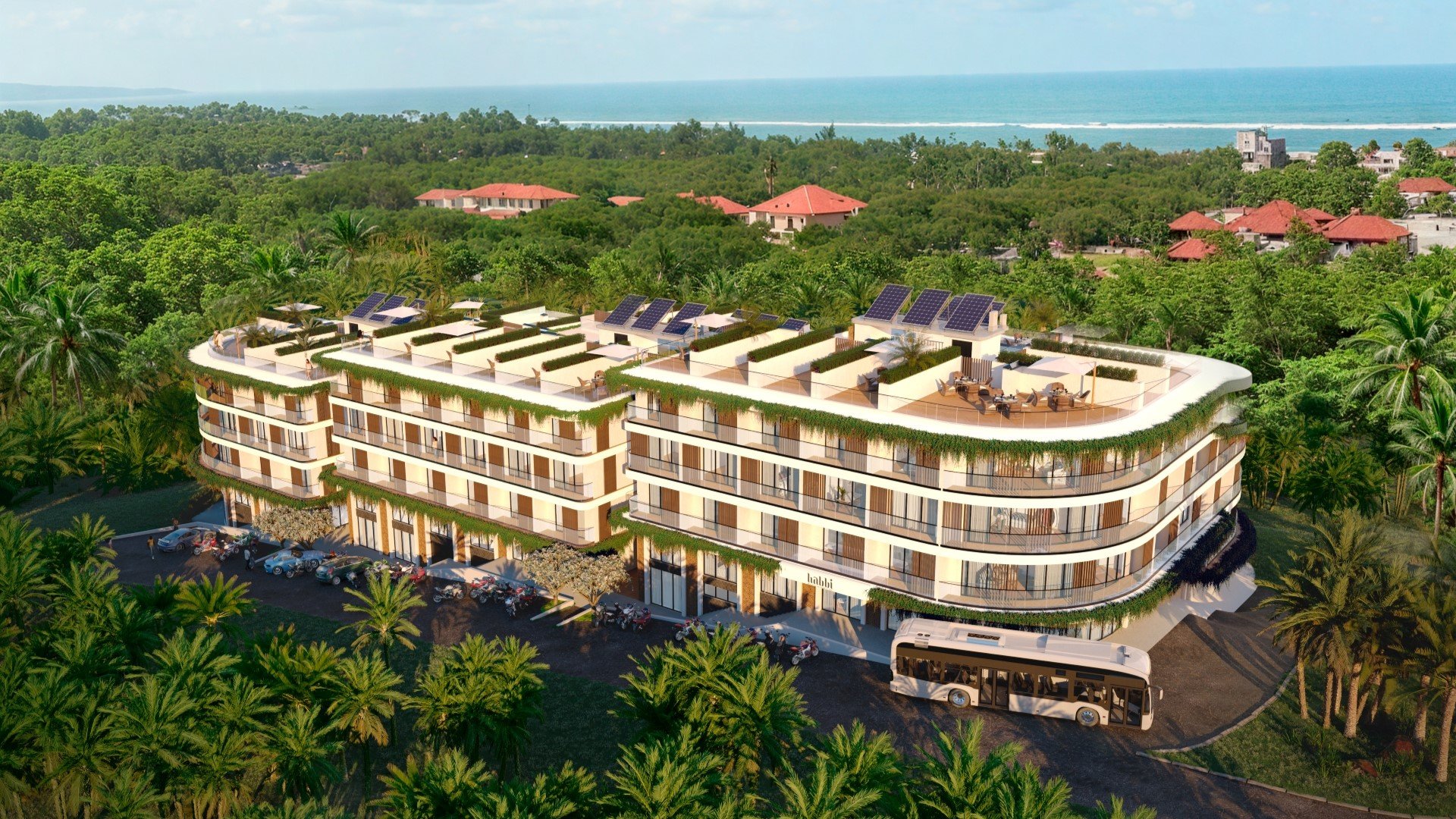
HABBI Bali Melasti is an apartment complex next to Melasti beach, designed for families, couples and long-stay guests.
On-site amenities:
- Restaurant
- Spa
- Fitness centre
- Co-working space
- Conference room
- Children’s centre
- Three separate pools
- Rooftop bar on the roof of the complex
- Gated, guarded grounds
For the premium segment, location is not the only thing that matters — security counts too. According to the developer, gated grounds and round-the-clock security can raise the rental rate by 15–30% compared with similar properties that lack these features.
The complex sits 134 metres above sea level, with ocean views. That is above the zone of the main natural risks affecting coastal areas. The structure is engineered to withstand seismic loads of up to magnitude 9 on the Richter scale, Sika waterproofing is used, and the structural frame carries a 10-year warranty.
Completion is scheduled for Q4 2027.
Apartment prices (promo price valid until 1 August 2026):
| Type | Area | Price |
|---|---|---|
| Studio | 37 m² | from $131,000, promo price from $99,900 |
| One-bedroom | 55 m² | from $171,000, promo price from $144,000 |
| Two-bedroom | 92 m² | from $236,000 |
A private rooftop can be added to any unit — a separate option from 30 m² with ocean views. It is a space for relaxing, dining and spa. The rooftop is sold separately; under the promotion until 1 August 2026, from $64,000. The extra area lowers the price per square metre and adds to rental income.
Who is building and managing it
The project is being delivered by Balimass Investment Technology.
Management is handled by Zenith Hospitality, a team experienced in the Southeast Asian hospitality business and in working with international brands, including Ritz-Carlton.
For an investor, this means all operational tasks are handed to a professional operator — from attracting guests to maintaining the property.
An investment, using a studio as an example
Take a studio with a base price of $131,000.
The initial deposit is 10% ($13,100). The balance is paid via an interest-free instalment plan over up to 2.5 years.
The property starts generating income within the first months. Under the conservative scenario (65% occupancy, $95 rate) this is around $1,500 a month, and these funds partly cover the instalment payments.
As a result, the real outlay falls to roughly $119,000 against the nominal price of $131,000.
The yield, meanwhile, is calculated on the property’s full price, not on the actual outlay.
Until 1 August 2026, a special price applies to studios — from $99,900, with a 20% down payment and interest-free instalments through to the end of 2027.
Which risks the project covers
A booking is secured with a 1% deposit, which remains refundable for 21 days and is credited towards the purchase price.
The project is already under construction. To date, 57 investors are taking part. The right of use is granted under the Hak Sewa scheme for 30 years, with the option to extend for a further 30. The project holds all the necessary permits.
HABBI Bali Melasti is not a story about a quick resale. The project’s investment logic rests on a growing flow of tourists, limited supply in the location, professional management and a yield that, even under the conservative scenario, stays above most popular property markets.